Solution Squad: Empowering Student Leaders to Create a Positive School Culture
What is Solution Squad?
Solution Squad is a student leadership program that empowers students to act as role models throughout the school. These trained leaders help create a safe, inclusive, and solution-focused environment by supporting their younger peers in three key ways:
✅ Promoting PEACE – Helping students solve non-violent problems and conflicts.
✅ Promoting INCLUSION – Noticing when someone is alone or feeling down and offering kindness.
✅ Promoting SAFETY – Reminding and redirecting students who forget to follow school rules.
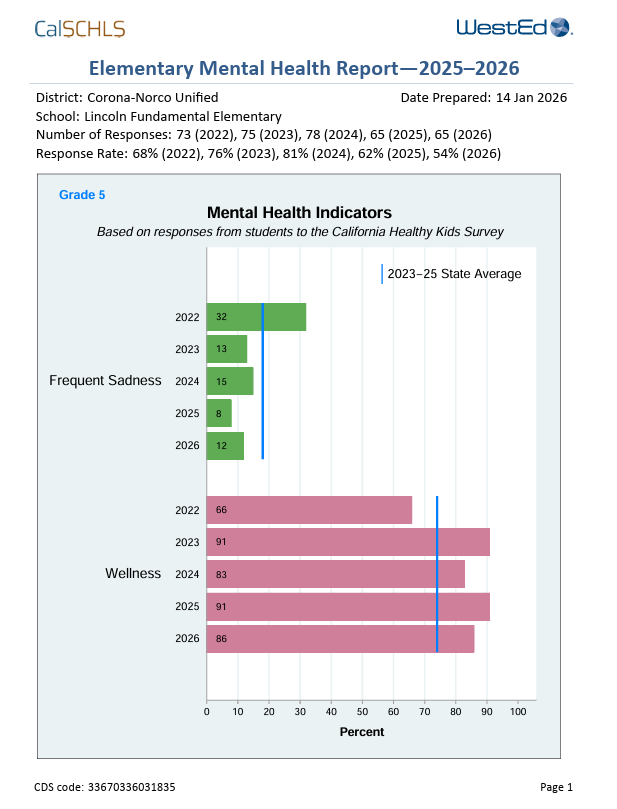
Solution Squad began in 2023
Mental health scores immediately exceeded the California State average!
This program is perfect for both middle and elementary schools that are ready to make a big change in their school culture. Solution Squad Leaders help with school-wide initiatives that promote kindness, respect, and a sense of belonging. Through this program, students develop strong communication and leadership skills, making a lasting impact on their school community.
The impact of this work has been reflected in measurable schoolwide outcomes. School counselor, Cher Kretz, has been running this program for four consecutive years at Lincoln Fundamental School in California. Following the implementation of Solution Squad, California Healthy Kids Survey data showed improvement in student mental health and wellness. Prior to the program, student reports of frequent sadness were 10 points above the state average. Following implementation, the score dropped to 12 points below the state standard, indicating students were experiencing increased happiness and emotional well-being. Additionally, Lincoln’s school wellness score increased dramatically from 66 to 91 in just one year.
The History of Solution Squad
Solution Squad was founded by school counselor Cher Kretz as a modern, solution-focused approach to student leadership. The inspiration came from the Conflict Manager programs that were widely used in the 1990s and 2000s, where students were trained to mediate conflicts among their peers on the playground.
While these programs made a positive impact, there was a missing piece: the younger students relied on older students to solve their problems instead of learning how to solve them themselves. Many students were simply told what to do rather than being empowered to make their own decisions.
Cher Kretz knew there had to be a better way, one that not only encouraged peer support but also equipped younger students with problem-solving skills they could use for a lifetime. This led to the creation of Solution Squad.
Solution Squad goes beyond conflict resolution. It transforms student leaders into mentors and guides who help younger students discover their own solutions rather than simply fixing problems for them. Research shows that when people come up with their own solutions, they are more likely to follow through.
That’s why Solution Squad trains student leaders in solution-focused communication skills, ensuring they can ask the right questions, listen effectively, and encourage positive outcomes. This program is designed to be simple, effective, and adaptable for any school looking to foster a well-rounded, positive school culture.
By implementing Solution Squad, schools gain a proactive, student-led approach to promoting peace, inclusion, and leadership, creating a stronger, more connected community where every student feels seen, heard, and empowered.
Why Cher Created Solution Squad: A Personal Journey
In 2005, I was a new school counselor eager to make a difference. One of my first initiatives was launching a small Conflict Management Crew at my elementary school. I followed a simple set of guidelines shared by other counselors running similar programs, and over the next five years, I refined and personalized it, developing my own training lessons and leadership strategies.
One of the most incredible experiences during that time was training my own daughter to be a Conflict Manager. Watching her step onto the playground, interact with younger students, and guide them through small conflicts was a moment of pure joy. She wasn't just solving problems—she was empowering others to find their own solutions. Seeing her grow as a leader was one of the most rewarding experiences of my career.
Then, life took me in a new direction. I transitioned to high school counseling and later began teaching at the college level. Ten years passed, and in that time, educational research and best practices evolved. When I was asked to return to elementary school counseling, I knew I had the opportunity to create something even better.
By then, I had become a solution-focused trainer, and I had a new vision. Instead of just helping students manage conflict, I wanted them to develop the skills to become solution-focused leaders. I wanted to build a program that encouraged self-discovery, problem-solving, and peer mentorship in a way that felt natural and empowering.
As I was developing this new idea, I shared it with my daughter, now an adult. Her response stopped me in my tracks.
"Mom, don’t you know? I became a teacher because I was part of your program. The way you taught me to help kids help themselves made me realize that’s what I wanted to do for my career."
At that moment, I knew this program had to exist.
Hearing my daughter’s words was a powerful reminder that students don’t just need someone to fix their problems—they need to be empowered to believe in their own ability to create solutions. That realization fueled my conviction to bring this program forward, transforming it into a truly restorative, solution-focused approach that could give students the communication tools, leadership opportunities, and confidence to make a lasting impact.
Solution Squad isn’t just about the here and now; it’s about equipping students with skills that will shape their future. Whether they become teachers, leaders, or simply more compassionate and thoughtful individuals, this program gives them a foundation of hope and empowerment that stays with them for a lifetime.
-Cher Kretz
Building School-Wide Buy-In for Solution Squad
Creating a positive school environment begins with understanding the real problem. Research consistently shows that unstructured free time, such as recess and lunch, is when the highest rates of bullying and social conflicts occur. According to studies on school climate and student behavior, playgrounds are where exclusion, teasing, and conflicts peak because students are making their own choices without structured guidance. Yet, recess remains one of the most anticipated and memorable parts of childhood. Instead of using punitive discipline to address playground issues after they arise, schools that implement restorative approaches see greater success in preventing negative behavior in the first place. This is where Solution Squad comes in.
A peer-led program like Solution Squad provides built-in leadership and positive role modeling, where older students set the tone for expectations rather than having rules enforced solely by adults. This approach aligns with restorative practices that many schools are already moving toward—empowering students to solve problems, build social skills, and contribute to a healthy, safe school culture. More than just a conflict resolution program, Solution Squad is a proactive intervention that not only reduces harmful behaviors but also fosters mentorship, inclusion, and personal growth. Older students gain leadership experience and ownership over their school’s climate, while younger students see their peers modeling kindness and problem-solving. It’s a win-win.
To further strengthen buy-in, it’s helpful to reference solution-focused practices, which form the foundation of Solution Squad. Dr. Linda Metcalf’s book, Counseling Toward Solutions, is an excellent resource that explains why a solution-focused approach is more effective than traditional problem-focused interventions. Rather than dwelling on problems, solution-focused practices guide individuals toward identifying solutions and building a hopeful, preferred future. This method has been widely adopted in schools and counseling because it helps students feel capable, empowered, and engaged in making positive changes. My TEDx talk, How to Lead with Hope: Solution-Focused Conversation Navigation, also explores this concept in action—showing how asking the right questions and focusing on solutions leads to meaningful, lasting change.
Who Needs to Buy In?
The good news is, you don’t need full buy-in to start! Many successful Solution Squads begin as small pilot programs, where a few trained students make an impact that naturally sparks interest and organic growth. However, gaining administrative support early is important for ensuring long-term success. A yes from your principal or leadership team helps provide visibility and credibility. Additionally, informing all staff—especially playground monitors, teachers, and support staff—ensures they understand the role of Solution Squad and can support its mission. When staff see the program in action, they’re more likely to champion it and integrate it into school-wide behavior initiatives.
In the end, Solution Squad is a playground initiative and so much more! It’s a tangible intervention that strengthens student leadership, conflict resolution skills, and school culture as a whole. By fostering a sense of ownership and belonging, the program not only reduces negative behaviors but also creates a community where students feel safe, supported, and empowered to make a difference.
Running a Solution Squad Program
The purpose of this overview and training is to help you learn about the Solution Squad program created by Cher Kretz and understand why and how to implement it on your school campus. In this article, you will begin to learn how to guide students through three solution-focused sessions so they can confidently serve as Solution Squad Leaders. However, before you begin, it is important to understand how to select students and how to structure the program to set it up for success. Each school is different, so while this guide provides best practices, feel free to adjust it to meet the needs of your students and staff.
How to Select Solution Squad Leaders
Solution Squad works best when you choose a diverse mix of students, including both natural leaders and students who may be at risk.
Why Include Natural Leaders?
These students naturally influence their peers. By giving them a structured leadership opportunity, you help direct their influence in a positive way.
Why Include At-Risk Students?
As educators, our job is to empower students to reach their full potential. Some students show leadership qualities but may not always lead in the right direction. Providing these students with a role that builds confidence and teaches responsibility can be life-changing.
Additionally, some students may not be outwardly struggling but may feel lost or lonely based on school surveys. These students may not initially see themselves as leaders, but when given the opportunity, they often rise to the occasion.
Why a Mix of Both?
A diverse squad leads to greater empathy and perspective. Students who have faced challenges such as bullying often bring compassion and understanding that is invaluable when helping younger students.
How to Choose Your Squad
To ensure a strong group of leaders, use a selection process that allows for student interest and educator recommendations.
Selection Process Best Practices:
Application Process:
Allow students to apply for the role using a simple Google Form or a written application.
Ask questions about why they want to join, how they handle conflicts, and what leadership means to them.
Invitation to Apply:
Personally invite students you see as good candidates.
Encourage teachers and administrators to recommend students who could benefit from this leadership role.
Squad Size Recommendation:
A group of 20-25 students works well.
Adjust based on school size, available support, and program goals.
Scheduling Solution Squad Duty Days
To keep the program organized and effective, students should have a designated day to serve on the playground. This ensures that:
Playground staff and teachers know which students are on duty.
Squad members know exactly when and where they are expected to help.
There is no confusion about roles or responsibilities.
Best Practices for Scheduling:
📅 Monthly Schedule:
Create and distribute a monthly schedule to students and staff.
Clearly outline who is on duty each day and where they should report.
🗂 Squad Meetings:
Meet every other month to check in, address concerns, and gather student feedback.
Adjust schedules and offer additional training as needed.
Accountability and Expectations
Solution Squad members are expected to act as leaders on campus. To maintain this standard, set clear expectations and consequences for behavior.
Building Accountability into the Program
🔹 If a student is sent to the office for behavior:
They must meet with the program leader before serving on the playground again.
🔹 If a student is suspended:
They may be able to stay in Solution Squad, but will take a month off and meet with the counselor to discuss expectations.
🔹 If a student repeatedly violates behavior expectations:
They will be removed from Solution Squad.
This structure gives every student a chance to meet expectations and grow as a leader while ensuring the program remains respected and effective.
Final Thoughts
The Solution Squad is more than just a peer mentoring program—it’s a way to empower students to be their own solution-focused mentors.
By selecting a diverse group of leaders, providing clear expectations, and keeping communication open, you will create a student-led program that transforms school culture and gives every participant the opportunity to grow.
This program is adaptable, so personalize it to fit your school’s unique needs. Whether big or small, every school can benefit from student leaders who promote peace, inclusion, and safety.
